

Join the Kiwis who are hatching their tomorrow and have invested more than $2 billion with Hatch.
Extended hours trading lets Kiwi investors buy and sell US shares at times that actually fit their day, not the US clock. Pre-market and after-hours trading lets investors react to market news in real time, avoid middle‑of‑the‑night trading, and access opportunities outside the traditional US market session. This guide breaks down what extended hours trading is, why it matters to New Zealanders, how it works, and how it can be used in investing.
What is extended hours trading?
Extended hours trading is the buying and selling of shares outside the regular US market session, 9:30am – 4pm Eastern Time. Depending on daylight savings, the US market is open for most Kiwi investors roughly between late night and early morning (about 1:30am–8am NZ time).
Extended hours trading adds up to 9.5 additional trading hours per day, split into two sessions:
- Pre‑market trading 🌅 Before the main session
- After‑hours trading 🌃 After the main session closes
Why extended hours trading matters for NZ investors
Unless you’re the nocturnal sort of Kiwi, buying and selling shares at 1:30am is pretty inconvenient. Extended hours trading can widen that window to be friendlier to your circadian rhythm. After-hours trading can let you buy and sell shares on your lunch break, and with pre-market trading opening at 8pm, you can back up Shortland Street’s regular viewing slot with the stock market – if that’s your thing.
US regular market hours compared to NZ time (April–September)
Based on time from April to September. Note that this changes with daylight saving time, for times between October and March check here!
Extended hours can let you react to news when it happens
Major earnings releases reporting on a company’s profits often happen outside regular market session times. Other market-moving events like pandemics, politics, and natural disasters don’t exactly stick to market open hours either. Extended hours trading sessions can let investors buy and sell as these events happen, rather than waiting for the market to open.
Top tip: Look at the earnings calendar on Yahoo Finance; each stock symbol has an earnings call time; AMC for after market close, BMO for before market open.
Benefits of extended hours trading for NZ investors
- Buy and sell shares at times you’re actually awake: For Kiwi investors keen on US companies, markets are generally open from 4am – 9:30am NZT. Extended hours give you up to 16 total hours of access per trading day.
- React to earnings and breaking news: Extended hours trading allows you to respond faster to results released before market open, or after market close.
- More time to think. No more rushing to invest in the short window of time when you’re awake and the markets are open.
- Capture price movements earlier: Pre‑market helps position trades ahead of the regular session.
Risks of extended hours trading
Of course, extended hours trading isn't simply ‘more trading time’. Pre-market trading and after-market trading comes with extra risks that you need to be aware of.
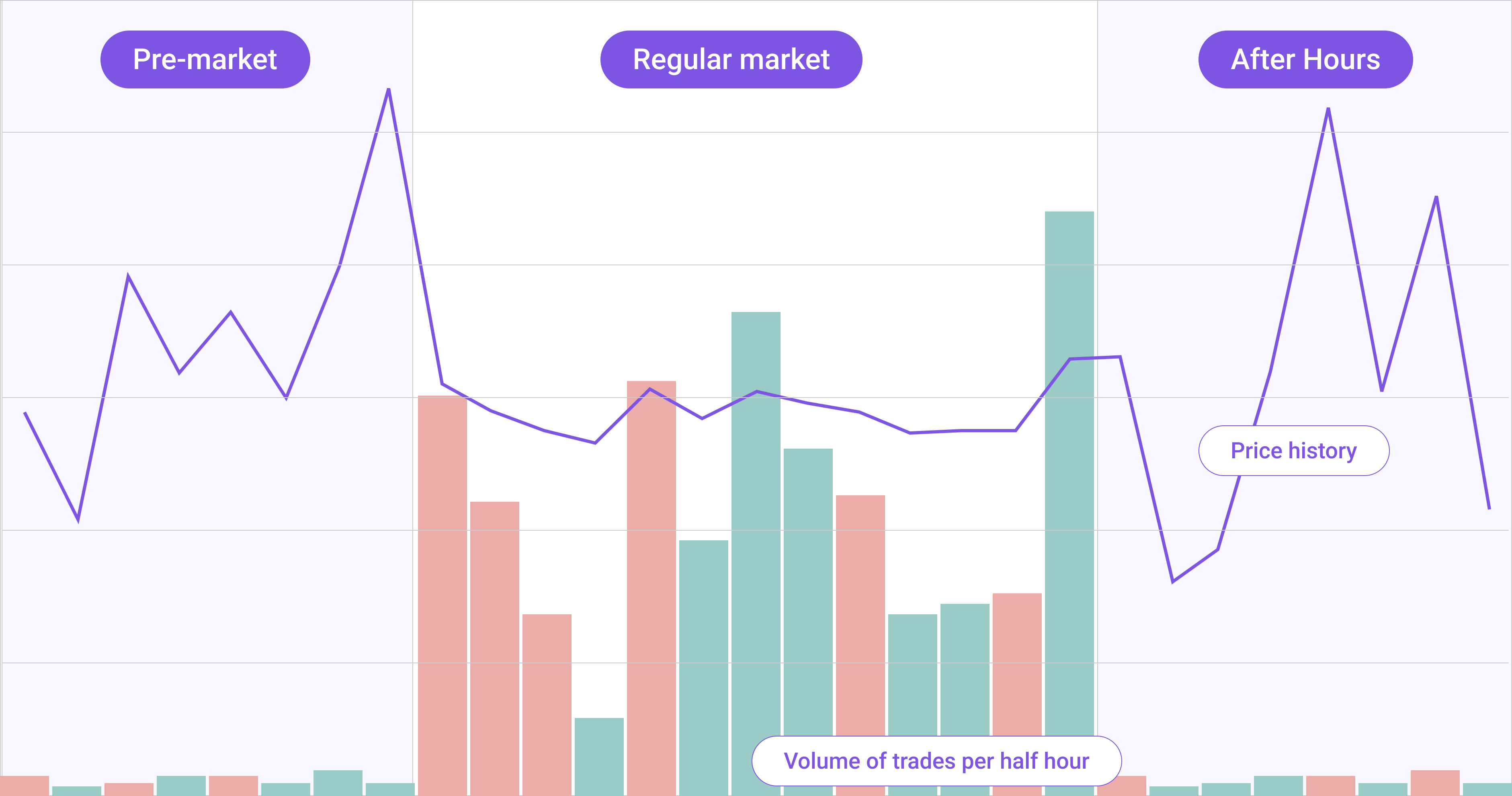
- Lower liquidity. Fewer people are buying and selling shares outside of the regular market hours. Fewer participants means fewer shares available to buy and sell. This can mean your buy/sell order might not fill at all! Read more about liquidity.
- Higher volatility. Price swings can be much sharper than during regular hours, especially immediately after earnings or news.
- Restricted to certain order types. On most platforms, you’re generally restricted to limit orders (whole shares) for after-hours and pre-market trading. A small proportion of US shares are available as market orders, however limit orders are primarily used to avoid buying and selling at an unexpected price.
What exactly is market liquidity?
Market liquidity refers to how easily shares can be bought or sold at predictable prices. When many buyers and sellers are active, trades are completed faster and prices stay competitive. When activity drops, prices can move more erratically and orders may not fill as you expect them to.
How does extended hours trading work?
The regular hours markets may be closed, but that doesn’t mean you can’t buy and sell shares. Much of what investors see when placing orders in extended hours will look like it works the same. In the back end is where things change; where your order goes, and who trades against it are two key differences.
Regular market hours
- Orders are sent to the stock exchanges to be processed, mainly the Nasdaq and the New York Stock Exchange.
- Active traders, retail investors, institutional investors, and market makers buy and sell shares.
Extended hours trading
- During pre-market and after-hours trading sessions, orders are processed through Electronic Communication Networks (ECNs) instead of traditional exchanges. ECNs match buy and sell orders electronically without the involvement of ‘market makers’.
- Active traders, some retail investors, and institutional investors buy and sell shares - some market makers trade selectively - or not at all.
When should you use extended hours trading?
Extended hours trading makes the most sense when you’re reacting to earnings or major news. If you’re placing routine buys or dollar-cost averaging, regular hours are usually better. If you’re already aware of the risks of using extended hours trading, understand the differences between this and regular market hours.
Regular market vs extended hours: What’s the difference?
How extended hours trading works on Hatch
Hatch offers pre-market and after-hours trading as an additional free feature.
You can turn extended hours on or off from your account settings. On Hatch, extended hours trading is not available with stop-loss or stop-buy orders, these order types will not be triggered in pre-market or after-hours trading.
Keep in mind that Hatch Kids Accounts can’t use extended hours trading until it has been activated on the parent account. If you’ve got an Auto Invest set up, these orders execute during regular market hours.
Read more: Using Extended hours trading on Hatch

We’re not financial advisors and Hatch news is for your information only. However dazzling our writing, none of it is a recommendation to invest in any of the companies or funds mentioned. If you want support before making any investment decisions, consider seeking financial advice from a licensed provider. We’ve done our best to ensure all information is current when we pushed ‘publish’ on this article. And of course, with investing, your money isn’t guaranteed to grow and there’s always a risk you might lose money.




.png)